
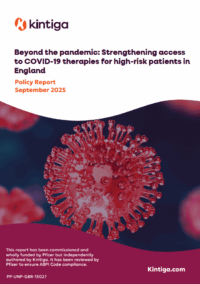
A new report: *Beyond the Pandemic: Strengthening Access to COVID-19 Therapies for High-Risk Patients in England, has revealed significant regional inequalities in access to life-saving COVID-19 treatments for clinically vulnerable people. Immunodeficiency UK contributed to the report.
This report expands on the topics covered in their previous report: Beyond the pandemic: Addressing disparities in timely access to COVID-19 therapeutics.
*The report was commissioned and wholly funded by Pfizer but independently authored by Kintiga. It has been reviewed by Pfizer to ensure ABPI Code compliance.
Here we summarise the key findings and recommendations from the report, which was developed through interviews with patient group representative interviews, clinicians and healthcare commissioners:
- Persistent regional variation in service models, with only 74% of ICBs retaining COVID Medicines Delivery Units (CMDUs).
- Widespread confusion regarding access pathways and inconsistent communication.
- Lack of access to free testing for infection, and systemic de-prioritisation of COVID-19.
- Systemic communication failures
“We’ve gone from centralised letters and shielding support to total radio silence.” Dr Susan Walsh, CEO, Immunodeficiency UK.
- Emotional and mental health toll – The sense of being “forgotten” and “abandoned” was a consistent theme. High-risk patients report anxiety attending clinical appointments where masking is no longer enforced.
- Testing and treatment breakdown – In rural or underserved areas, pharmacies often lack stock or are unaware of eligibility schemes. Without timely tests, high-risk individuals miss the five-day window and become ineligible.
“Patients are ping-ponged between GPs, NHS 111 and CMDUs—with no clear route in.” Dr Susan Walsh, CEO, Immunodeficiency UK.
Recommendations from the report to protect vulnerable groups
- Reinstate annual communications to high-risk patients outlining eligibility, access routes and treatment guidance.
- Mandate public-facing guidance for every ICB on COVID treatment access.
- Streamline test and treatment
- Fund multilingual awareness campaigns
- Monitor and publish national uptake data
- Train primary care and 111 staff on eligibility and referral processes.
- Enable postal or phone-based access alongside digital tools.
- Collect local data on access, equity, and patient outcomes to inform planning and commissioning.
Posted October 2025


