

Immunodeficiency UK is proud to have been a collaborative partner with the Murdoch Children’s Research Institute and the James Lind Alliance in developing the top ten research priorities for paediatric haematopoietic stem cell transplants (HSCT).
This important piece of work was shaped by the voices of patients, families, and clinicians, ensuring that the areas of greatest need and impact are placed at the forefront of future research. We are honoured to have supported this important work and give thanks to the research team and the many families who contributed their experiences and insights.
The top 10 research priorities
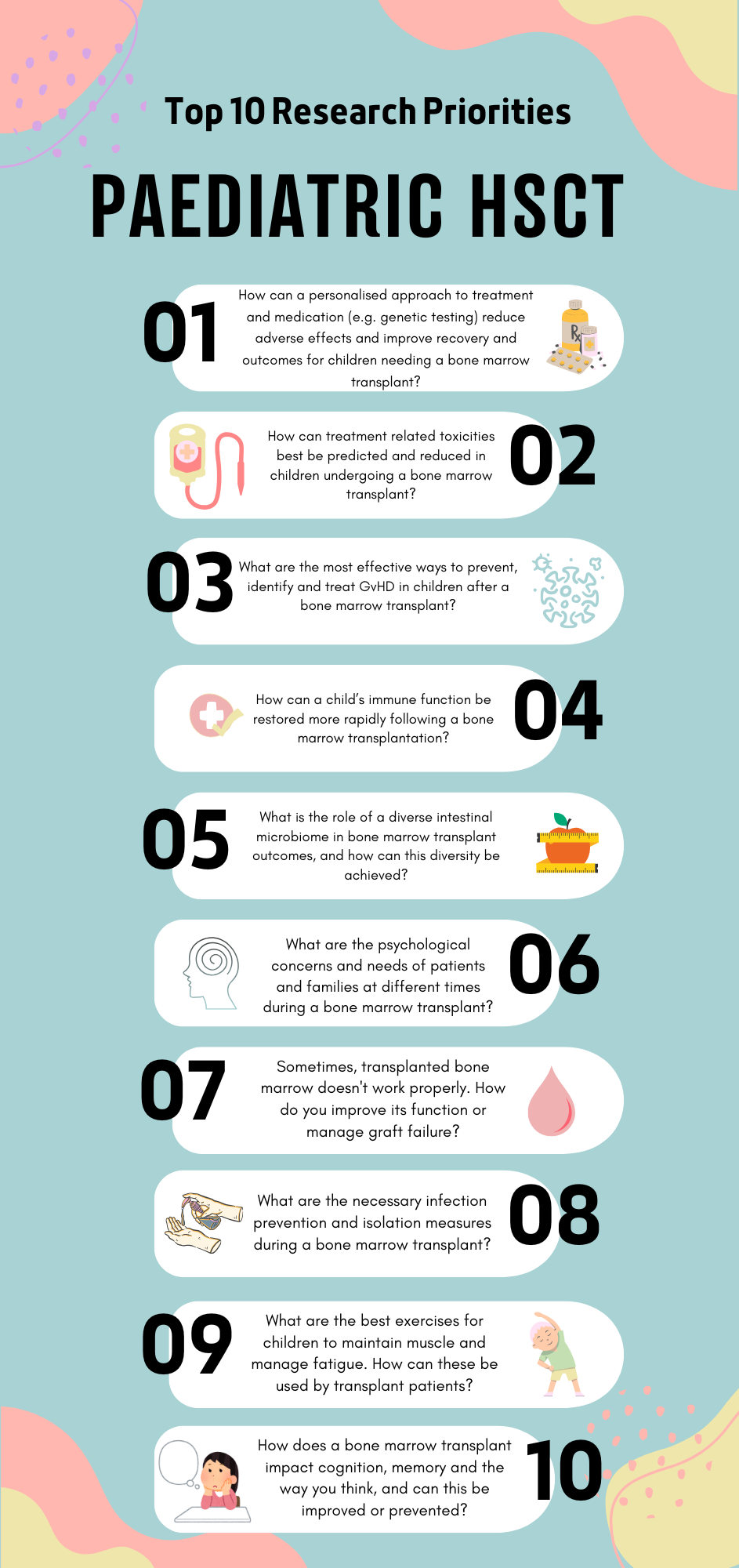
- Personalised treatment – How can a personalised approach (e.g. genetic testing) reduce adverse effects, improve recovery, and improve outcomes for children needing a bone marrow transplant?
- Reducing toxicities – How can treatment-related toxicities best be predicted and reduced in children undergoing a bone marrow transplant?
- Preventing and treating GvHD – What are the most effective ways to prevent, identify and treat graft-versus-host disease (GvHD) in children after a bone marrow transplant?
- Immune recovery – How can a child’s immune function be restored more rapidly following a bone marrow transplant?
- Role of the microbiome – What role does a diverse intestinal microbiome play in bone marrow transplant outcomes, and how can this diversity be achieved?
- Psychological support – What are the psychological concerns and needs of patients and families at different times during a bone marrow transplant?
- Managing graft failure – Sometimes transplanted bone marrow doesn’t work properly. How can its function be improved or graft failure managed?
- Infection prevention – What are the necessary infection prevention and isolation measures during a bone marrow transplant?
- Exercise and fatigue management – What are the best exercises for children to maintain muscle and manage fatigue, and how can these be used by transplant patients?
- Cognitive impact – How does a bone marrow transplant impact cognition, memory, and the way a child thinks, and can this be improved or prevented?
This list is designed to focus global efforts on the most pressing questions that will directly improve the lives of children and families undergoing HSCT.
At Immunodeficiency UK, we are committed to continuing our support for research and collaboration in this vital area.
Posted August 2025.


